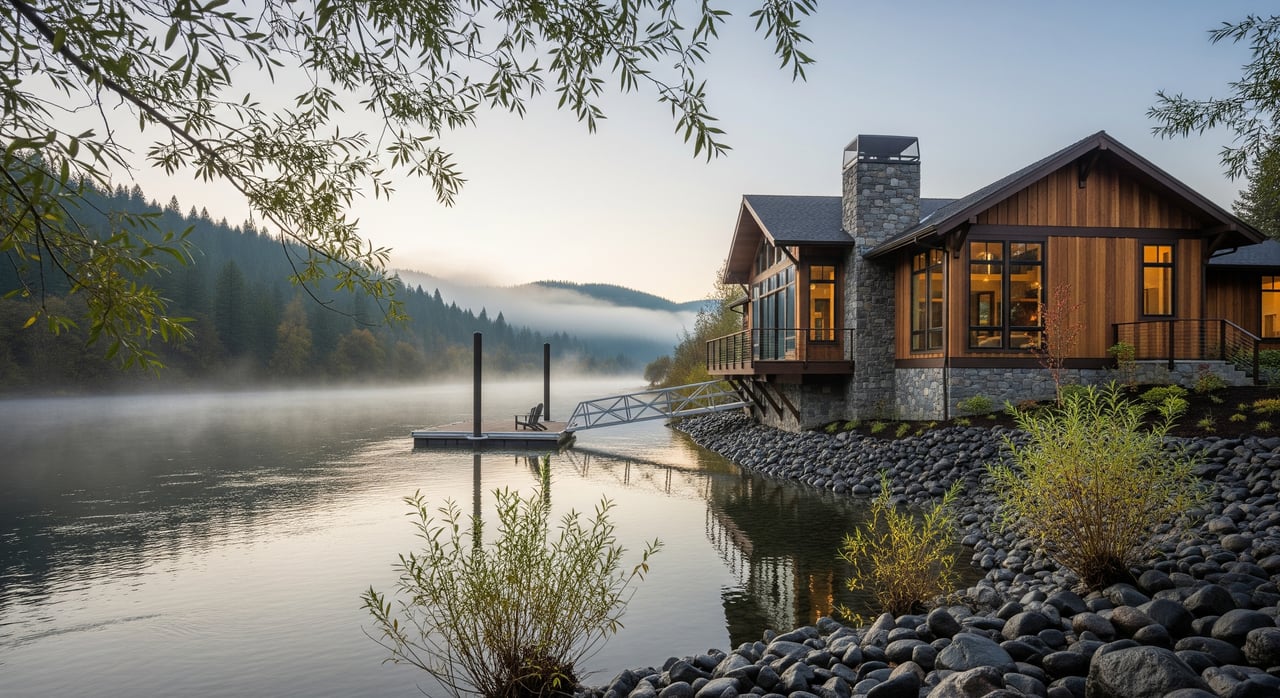
Is your riverfront home hard to price because no two stretches of the Rogue look the same? You are not alone. Waterfront value in Grants Pass is driven by a mix of frontage, views, access, risk, and permits that do not show up in typical comps. In this guide, you will learn how buyers think, what features add or subtract value, and a practical workflow to set a confident list price. Let’s dive in.
What drives value in Grants Pass
Frontage and access
Buyers pay most attention to deeded, usable river frontage. Deeded, private linear feet that you can safely reach and enjoy is more valuable than frontage tied up by easements or a separate parcel. Usable, stable access for stepping into the river or launching a kayak often beats a wider but steep, unstable bank.
View quality and orientation
Unobstructed, long water views typically command a premium. If your home frames islands, rapids, or a long upriver or downriver vista, that matters. Seasonal foliage and home orientation can shift views from panoramic to partial, which should factor into pricing.
Privacy and nearby uses
Mature riparian vegetation, distance from neighbors, and a buffer from public trails or parkland increase perceived privacy. Adjacency to high-use public access can reduce privacy and value even if you have frontage.
Bank stability and erosion
Stable banks with rock outcrops or permitted retaining features reduce risk and increase value. Active erosion or slumping can trigger price discounts because buyers anticipate stabilization costs and ongoing maintenance.
Flood risk and elevation
Flood zone status and finished-floor elevation relative to the base flood elevation affect financing, insurance, and buyer comfort. Homes outside high-risk zones or with living areas elevated above risk levels tend to draw stronger offers.
Docks and permitted improvements
Permitted docks, stairs, terraces, retaining walls, and erosion control add appeal. Unpermitted work can slow a sale or require concessions, so permit status should be verified and disclosed.
Utilities and access
Proximity to Grants Pass services, reliable road access, and availability of sewer or pressurized water can move the needle on price. Septic, well, or private road obligations should be documented and priced in.
Lot size and layout
Larger lots with river frontage often carry a premium for recreation, privacy, and secondary uses. Configuration matters. A well-shaped lot that opens to the river can feel larger and more functional than a narrow or awkward layout.
Legal rights and encumbrances
Clean deeded frontage, riparian rights, and minimal encumbrances increase confidence. Recorded easements, conservation buffers, or neighbor rights can limit access or development and should be reflected in price.
How to price your riverfront home
Pick the right comps
Start with recent riverfront sales in the Grants Pass stretch of the Rogue if possible. In a low-inventory niche, you may need to widen the window to 12–24 months and document time adjustments. Match home size, condition, and lot basics first, then layer in waterfront differences.
Make waterfront adjustments
Create discrete adjustments for the features buyers value most. Consider frontage length, usable access, view rating, dock presence and permit status, privacy, flood zone, bank condition, and distance to downtown or public launches. Avoid lumping waterfront into lot size alone. Waterfront value is nonlinear and often reflects a lifestyle premium.
Reconcile to a range
Calculate adjusted values across several comps, then weight the closest matches and most recent sales. Use that range to set a list price and an expected sale price based on current inventory and demand.
Step-by-step CMA workflow
- Gather property fundamentals and waterfront specifics, including deeded linear frontage, bank type, access points, view description, privacy, flood zone, and any permitted structures.
- Pull 3–6 sold comps prioritizing recent riverfront sales. If thin, include waterfront lot sales and nearby non-waterfront homes to estimate increments for frontage and docks.
- Make standard adjustments for living area, beds and baths, age, and condition.
- Apply waterfront adjustments for frontage quality, view, dock, privacy, flood risk, bank stability, and proximity to amenities. Document the rationale for each adjustment.
- Reconcile to a value range and set a pricing strategy that reflects seasonality, expected days on market, and buyer demand for lifestyle properties.
- Prepare a clean disclosure folder with permits, surveys, flood details, and any cost estimates for bank work or dock maintenance.
Demand, financing, and insurance
Who buys along the Rogue
Grants Pass riverfront appeals to local owner-occupiers who want daily recreation, active retirees seeking scenic living near town, and some second-home buyers. Investors are a smaller niche and may focus on regulations and long-term maintenance.
Appraisals and lending
Because riverfront comps are limited, lenders and appraisers look closely at recent sales and documented adjustments. Portfolio lenders familiar with waterfront can sometimes be more flexible, but larger down payments are common when comps are thin. Selecting an appraiser with local waterfront experience can reduce surprises.
Ownership costs and insurance
Flood insurance and maintenance for banks, stairs, or docks influence buyer willingness to pay. When buyers anticipate stabilization needs or high premiums, they discount offers accordingly. Pricing should consider these lifecycle costs.
Permits, rules, and must-checks
In-water work and docks
Most in-water work in Oregon, including docks, removal or fill, and bank stabilization, requires permits. Expect involvement from state agencies and sometimes federal permits. Seasonal work windows and habitat protections may apply, so verify feasibility early.
Floodplain and building rules
FEMA flood maps and county floodplain ordinances govern what can be built and how high finished floors must be relative to base flood elevation. These rules affect renovation scope, timelines, and insurance requirements.
Riparian rights and water use
Riparian access differs from water rights for irrigation or withdrawal. Confirm deed language, recorded easements, and any conservation buffers. A title company or real estate attorney can help you validate rights and obligations before you price.
Pricing tips for sellers
- Lead with what buyers value. Highlight deeded usable frontage, unobstructed views, privacy, and permitted improvements.
- Price season-smart. Riverfront showings often spike in warmer months when lifestyle is easy to feel. Adjust expectations for time on market in off-season.
- Be flood-transparent. Provide flood zone status, floor elevation, and any mitigation. Clarity builds trust and shortens negotiations.
- Document permissions. Have permits and final inspections ready for docks, stairs, terraces, and stabilization. Note any shared facilities or maintenance agreements.
- Address the bank. If erosion is present, gather a contractor or engineering estimate so buyers can price the risk. That information can protect your net.
What to gather before listing
- Legal and site basics: address, parcel ID, legal description, deed copy, lot size and configuration, and deeded frontage length.
- Home details: living area, bed and bath count, year built, condition, and major renovations.
- Waterfront specifics: bank type, usable access points, view quality, privacy factors, and any retaining or erosion control.
- Improvements: dock or moorage details, permit status, condition, and capacity; stairs, terraces, or bulkheads with permits.
- Floodplain data: FEMA zone, base flood elevation if known, and lowest finished floor elevation.
- Encumbrances: recorded easements, conservation buffers, public access dedications, or code issues.
- Utilities and access: septic or sewer, well or public water, road type and maintenance responsibility, and seasonal access notes.
- Comparable sales: 3–6 recent sales with recorded frontage length, dock presence, view rating, flood zone, and days on market.
- Cost estimates: potential bank stabilization, dock build or repair, and a flood insurance premium range from an insurer.
Bringing it all together
Pricing a riverfront home in Grants Pass is part market science and part lifestyle translation. You will get the best result by pairing solid comps with clear, documented adjustments for frontage, views, access, privacy, flood risk, and permitting. Present buyers with a transparent package and you will earn stronger offers and smoother underwriting.
If you would like a river-smart valuation and a listing plan tailored to your stretch of the Rogue, connect with the local team that lives and works here. Reach out to Whole Heart Realty. Let’s talk about your next move.
FAQs
How much does river frontage add in Grants Pass?
- It depends on deeded usable frontage, view quality, privacy, bank stability, flood risk, and permitted improvements; use recent riverfront comps and discrete adjustments to quantify.
Does a flood zone designation ruin value for river homes?
- Not necessarily; many buyers accept some risk if living areas are elevated and mitigated, but flood zones affect insurance, financing, and typically reduce value versus similar non-flood sites.
What permits are needed to build or repair a dock?
- In Oregon, most in-water structures require state permits and sometimes federal authorization, plus county approvals; verify timelines and feasibility before pricing.
How do I confirm deeded river frontage and riparian rights?
- Review the recorded deed and plats through a title company or real estate attorney to identify frontage, easements, and any public dedications.
Do private docks price higher than shared docks?
- Yes; exclusive moorage usually commands a premium over shared arrangements, adjusted for condition and permit status and supported by local comps.